
12th August 2026
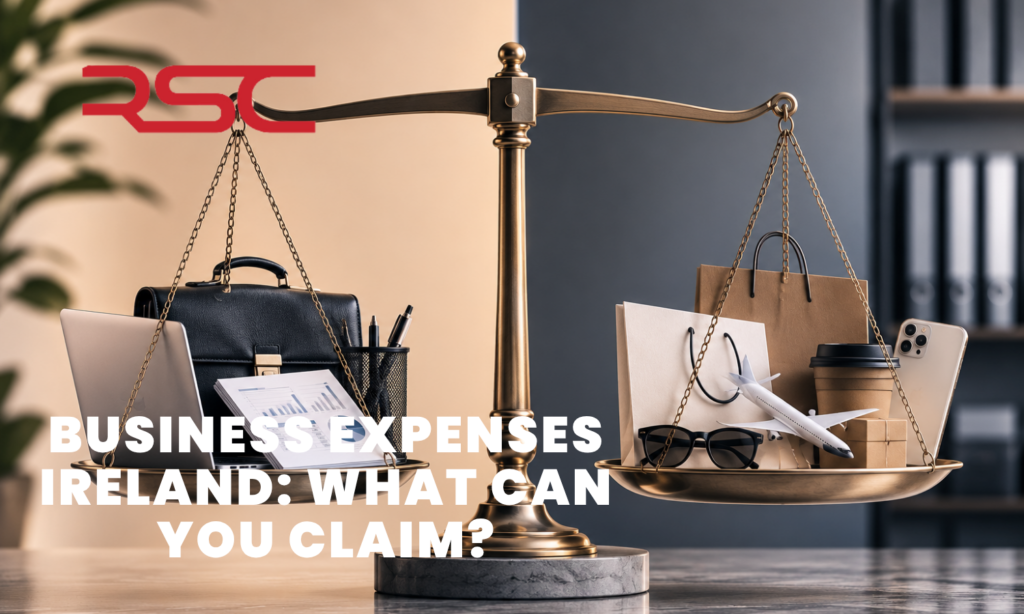
Running a business costs money, but not everything paid from a business bank account automatically becomes a business expense. One of the most common areas of confusion for business owners is deciding where business spending ends and personal spending begins.
The Basic Rule
For an expense to be deductible when calculating business profits, it generally needs to be incurred for the purposes of the trade or business.
Some expenses are straightforward. Stock purchased for resale, employee wages, accountancy fees and rent for business premises are typical examples of business costs.
Others are not so clear.
Can You Claim Your Lunch?
Buying lunch while working does not automatically make it a business expense. Everyone needs to eat, whether they are working or not, so a sole trader’s ordinary food costs are generally private expenditure.
There are specific circumstances where qualifying travel and subsistence costs may be deductible, but simply buying lunch during a normal working day does not make the cost allowable.
What About Clothing?
A suit may be purchased specifically for client meetings, but it can still be worn privately. Revenue specifically lists clothing as an expense that cannot generally be claimed, except for protective clothing.
Work boots, protective equipment or specialist clothing required for the work may therefore be treated differently from ordinary everyday clothing.
Cars, Phones and Other Mixed Expenses
Many expenses have both a business and private element.
Imagine that you use the same mobile phone for clients and personal calls, or your car for both business journeys and private use. This does not necessarily mean the entire expense must be excluded.
Revenue allows the business-related portion of certain mixed expenses to be claimed. The important point is to use a reasonable basis for separating business and private use and to retain appropriate records.
Travel Can Be Tricky
Business travel and ordinary personal travel are not the same thing. For employees and directors, travelling from home to the normal place of work is generally regarded as private travel. Genuine business journeys, however, may qualify under the relevant rules.
Travel can become particularly complicated for sole traders, employees working at different sites and people without a straightforward fixed workplace, so the circumstances matter.
And Client Entertainment?
Taking a client for dinner may have a genuine commercial purpose, but that does not automatically make the cost tax-deductible. Revenue specifically excludes business entertainment expenses when calculating taxable business profits.
This is a good example of why “I paid for it for business reasons” and “it is tax-deductible” do not always mean the same thing.
Keep Business and Personal Spending Clear
Good bookkeeping makes these decisions much easier. Keep receipts and invoices, record the purpose of unusual expenses and separate personal transactions from business spending wherever possible.
Most importantly, do not assume that paying something through the company or business account changes its nature. The purpose of the expense and the applicable tax rules determine its treatment.
If you are unsure whether particular costs are allowable business expenses, contact our team. We can help you review your expenses, keep your records organised and ensure that legitimate deductions are claimed correctly without treating personal expenditure as a business cost.